
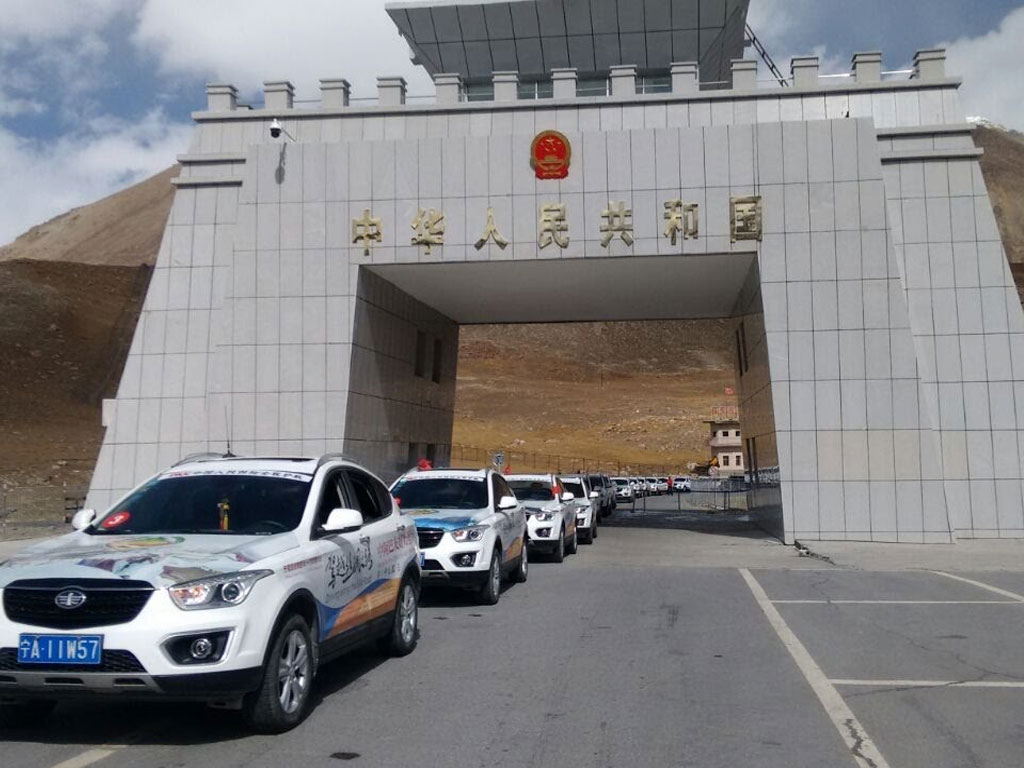
For quite some time, the people of Gilgit-Baltistan have been asking for provincial status, a demand that acquired particular urgency in the wake of the China Pakistan Economic Corridor. The CPEC has taken for granted, and rightly so, that this chunk of land through which it passes for quite some length is an integral part of Pakistan. And that being the ground reality the people of Gilgit-Baltistan want to be treated as Pakistan's fifth province, having unhindered access to rights and privileges the other four provinces enjoy. But that cannot be done. The said area is part of the erstwhile princely state of Jammu and Kashmir, and its constitutional future is subject to a plebiscite under the aegis of the United Nations. Should Pakistan convert Gilgit-Baltistan into its fifth province not only it would tantamount to forsaking its principled stand on the issue but India would annul its constitutionally granted special status to the J&K State territory that it occupies and merge the occupied part of Kashmir into its union framework. How to preempt this possibility, and at the same time facilitate access of G-B residents to their Fundamental Rights, was the lingering dilemma confronting Islamabad. A way out of it is the Presidential Order, which has now been approved by the Supreme Court - of course with some minor adjustments. The government has been asked to promulgate the said Order within a fortnight. This is how without compromising the constitutional dictate on the status of Gilgit-Baltistan the apex court has lent sanctity to its people's basic right to be treated at par with other Pakistanis. The Supreme Court has now extended its jurisdiction to the territory because it believes that is the "only way that fundamental rights can be granted to the people of G-B in the meaningful and realistic manner envisaged by this court in the case of Al-Jehad Trust". And at the same time, the apex court made sure that the status thus granted to Gilgit-Baltistan is not compromised without it being in the loop. The Supreme Court also observed that people of Gilgit-Baltistan have the "unassailable confidence" that their rights, and the enjoyment thereof, are not subject to the whims and caprice of every passing majority and that these are firmly grounded in the Constitution. Should an attempt be made to revert to the original position the Supreme Court would take "all steps within its constitutional mandate as may be required".
In essence, therefore, the territory of Gilgit-Baltistan has been granted virtual status of fifth province of Pakistan. This should have been done a long time ago. It were the Gilgit Scouts who ousted the maharaja's governor on October 30, 1947, and Pakistan took over its administration. Ever since that takeover, as the de facto sovereign, Pakistan should have catered to the basic legal and human rights of the people of Gilgit-Baltistan. Though the pace for change has been slow, by now several administrative offices have already been created under the Gilgit-Baltistan Order 2018. Also, the lawmaking by the Gilgit-Baltistan Council is subject to review by its courts, but they do not hold constitutional rights within Pakistan. From now on, the G-B residents will be able to challenge the appellant courts' decisions in the Supreme Court of Pakistan. Since lawmaking by the parliament is presently in limbo, the cry of the people of Gilgit-Baltistan has grown louder, persuading the Supreme Court to step in and provide relief under Article 184(3). The said provision empowers the apex court to give "such directions to any person or authority including any government ... as may be appropriate for enforcement of Fundamental Rights conferred by Chapter 1 of Part II". And, given India's opposition to the CPEC, and more so for its passage through Gilgit-Baltistan which it claims as part of undivided Kashmir, negative reaction on the part of New Delhi cannot be ruled out. Accepted, the future of Kashmir is subject to a plebiscite. But then who is opposed to the UN-monitored plebiscite; it is India. And, how hypocritical such a protest - while India's half a million troops are in Indian Occupied Kashmir to snatch even the Kashmiris right to live, Pakistan's top court has opened wide its doors of justice to the people of Gilgit-Baltistan.